
Equity Release from Glasgow.



Equity release lets you access the value you have built up in your home as a tax-free lump sum. You don’t need to move out, and you’ll keep owning your home.
Lloyds Bank mortgages for over 75s
Lloyds Bank mortgages for over 70s
Lloyds bank mortgages for over 65s
Equity release lifetime mortgage
The equity release product is a lifetime mortgage. It can help you unlock your home’s value by providing a tax-free lump-sum loan.
The most well-known equity release deals
These are mortgage-based products, including loans secured against your home. In general, you make no monthly repayments—the loan and accrued interest are repaid through the sale of the property if you die or enter long-term care.
Are you unsure which product is right for you?
To release equity from your home, you typically need to take out a loan, which usually involves a mortgage product.
The most commonly used equity release deals are mortgage-based products, loans secured against your home.
You usually repay the loan when the last borrower enters long-term care or dies.
Lifetime mortgages are among the most sought-after equity release products for homeowners aged 55 or older.
These Lifetime mortgages offer £1,000 cashback on completion, which you can use to pay legal costs.
The minimum age you can join is typically 55. According to the Equity Release Council, the average age for a brand-new customer is between 68 and 70.
Home reversion plans: You can raise money by selling all or part of your home while you live there, until you die or move into permanent residential care.
For peace of mind, the adviser can tailor plans to include downsizing protection.
This means that should you choose to move home shortly to a property that doesn’t meet one of our lending criteria, you can repay your plan with no hassle. Early repayment charges. Reduced protection is only applicable after five years of having an insurance plan.
If you release equity from your home, you may not be able to rely on your property to pay for the money you may need in the future. Retirement.
A variety of equity release products allow borrowers to raise funds to repay interest.
If the same 70-year-old opted for a lump sum, they could choose to pay 50 per cent of the interest each month.
Talk to the adviser for advice on how much you could release.
Then you can take out an equity release mortgage, so you can do this without dipping into your pension to move home or use other finances.
Comparing different equity release options can help you maximise your home’s value, as lenders may offer different percentages of your home’s value.
We offer a Lifetime mortgage.
The contract lasts for life, and you can make monthly payments if you choose. However, if you decide not to consider it, keep in mind that your balance will likely rise over the course. In most cases, the loan is repaid when the final borrower is placed in long-term care or dies, or when your home is sold.
Assistance for you and your loved ones to get on the property ladder is becoming more affordable and easier, but it comes with disadvantages and costs.
Find out how much money you could release across all the available equity release plans.
The loan amount and any accrued interest are repaid when the property is sold after the last borrower dies or when a borrower moves to long-term care.
If borrowers repay their loan early, they may incur “early repayment charges.” These charges may arise when part or all of the amount is paid in advance of the date specified in the contract.
Always seek advice from a professional equity release adviser before obtaining an equity release.
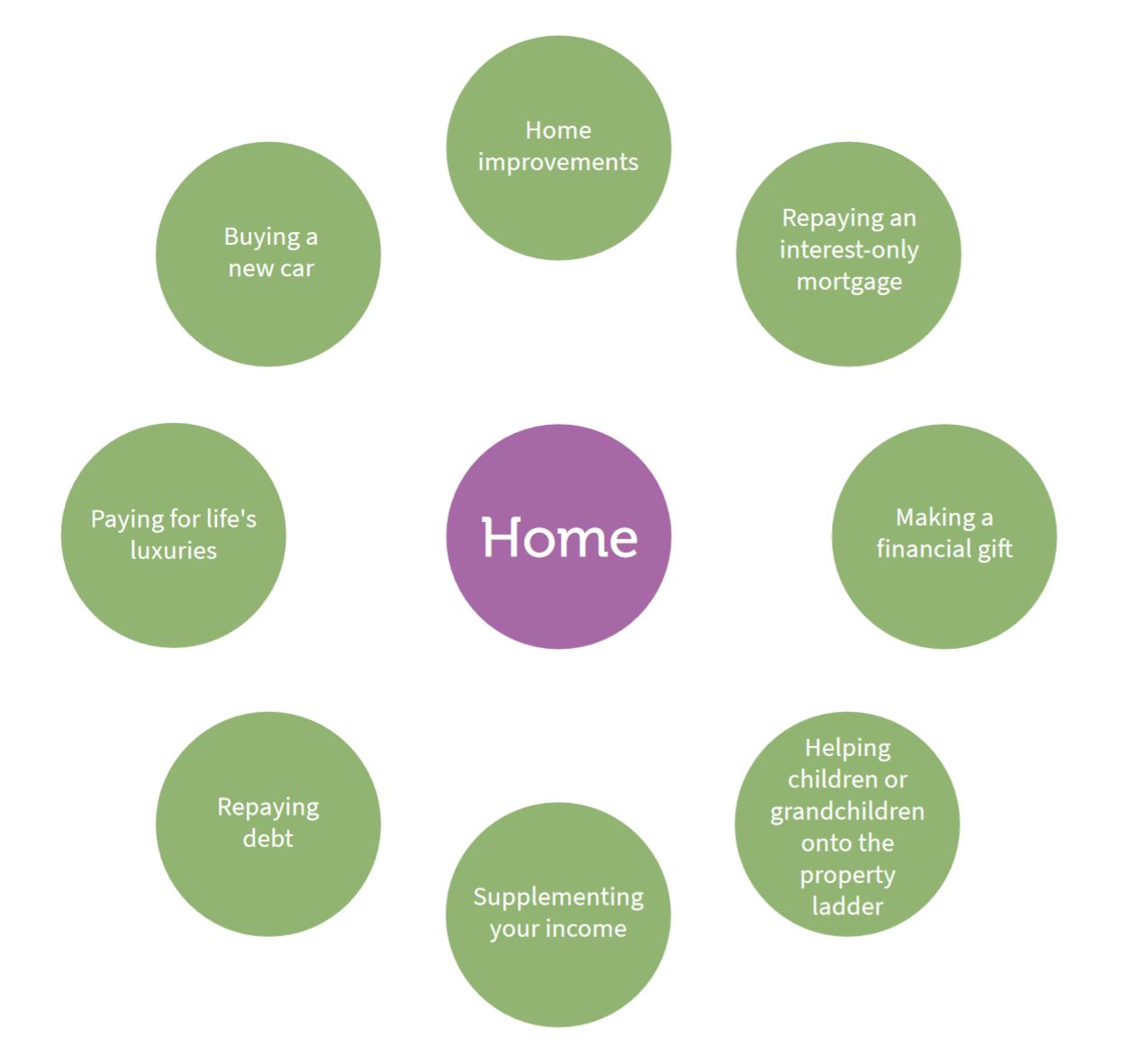
One of the most common reasons our members want to release equity is to clear debts, help someone else buy their first property, finance home improvements, or make a significant purchase, like a new car and a trip of a lifetime.
Equity release mortgages let you access equity in your home through a lump sum or regular payments, tax-free.
Based on that figure, the industry says house price increases over the past year could have offset some of the impact of compound interest for some equity release customers.
In most cases, the loan and interest are repaid through an eventual sale of your home at the time of your death, or must be placed in long-term care under the terms and conditions. Do you get your money all at once? We then offer 2 lifetime mortgage products, so you can choose one-time payments or a lump sum. You can also take a smaller lump sum and set up a cash reserve you can draw on whenever you like.
If you are 50 or older, there is a range of later-life lending options. The most popular is the lifetime mortgage, which has a minimum age of 55
RIOs, retirement mortgages, and home reversion plans also offer ways to release equity from your home.
With a home reversion plan, the company owns all or part of the property you call home. Choosing to pay a lump sum or take extra cash to boost your income could reduce your entitlement to means-tested benefits. Benefits either now or soon.
Taking out a loan could affect the inheritance you leave behind, state benefits, or the local authority that grants them. If you decide to take out a loan, it’s recommended to talk to trusted family and friends. They can offer support or suggest alternative ways to find the money you need.
You have several options for receiving a lump sum. Depending on how you need the money, you may receive it as a lump sum, in a series of smaller cash amounts, or as needed. Or you may receive it in smaller cash amounts at any time. The option to pay lump sums in the future is uncertain and contingent on whether you can borrow more money. You can also pay the interest later.
Retirement Interest-Only mortgages are like standard interest-only mortgages. Your payments may be lower than those on a traditional repayment mortgage. Unlike regular interest-only mortgages, they don’t have a specific date for repaying the balance.
The mortgage is usually paid out of your sale of the home at the time you sell it. Die or move permanently to be placed permanently into residential care. Plan for home reversion. You will raise money by selling the entire or part of your home and then living there until you die or move into permanent residential care.
Ensure you are granted your right to move to a different property, provided that the product provider accepts your new property as permanent security for your equity release loan (Equity Release Council standard).
Equity release lets you increase your property’s value and convert it into cash. You can do this by unlocking the equity in your home and turning it into money. Several policies let you access and release this equity (cash) when you’re older than 55. You don’t need to have paid off your mortgage to do this.
This means you or your estate can never owe more than the property is worth when it is transferred, even if property prices plunge.
It would help to get equity release advice before releasing tax-free cash from your home. Make sure you read the information.
According to government data, house prices have risen at an average annual rate of more than 7 per cent since the beginning of this year. Based on this figure, the industry believes the increase in house prices over the last year could have offset the impact of compound interest for some equity release customers.
They can offer support or suggest alternative ways to find the money you need. Options include using available savings, moving to a lower-cost home (downsizing), getting help from family members, and accessing state benefits—if you’re eligible for a local authority grant. This is if you’re eligible for a private loan or credit card.
Always talk to an expert equity release adviser, and make sure both the adviser and the equity release provider have FCA approval for the plans. FCA. If something happens to your plan, contact the provider first. They’ll have a complaint procedure that you must follow. If you’re not satisfied with the outcome or response, you can contact the Financial Ombudsman Service to see how they can help.
The term “lifetime” refers to a lifetime mortgage, different from a standard mortgage. If you want this, check out the Cheap Mortgage Search Guide for some helpful tips.
Home Reversion plans are for people aged 60 or more. A provider gives you a tax-free lump sum for a portion of your home at less than market value. Then, you can remain on the property (rent-free) until you pass away. If you sell, the proceeds are divided according to your and the lender’s percentages.
Your estate is not required to repay more than your home is worth, as long as it’s sold for the lowest possible price. Flexible repayment and withdrawal options: Lifetime mortgages let you receive a one-time lump sum or a smaller cash sum, plus a cash reserve you can draw from. You’ll have to pay interest on the money you withdraw. You can also make voluntary partial repayments under your terms and conditions.
Depending on your needs, you can receive it as a lump sum, in a series of smaller amounts as you need them, or a combination of both. Future growth isn’t guaranteed, as it depends on whether you can get more money. You can also choose to pay interest over time.
It’s crucial to consider the features you’d like your adviser to include in your equity release plan. If, for example, you’d like us to offer the most affordable interest rate available or release the most tax-free funds we can provide you with from the comfort of your home or other property, you may talk about this to your Equity Release adviser.
A lifetime mortgage can reduce your inheritance and may also reduce the amount you can pass on. It will affect your entitlement to means-tested benefits. You can stay at your home and never owe more than what you’re selling it for (subject to the terms and conditions). If you decide to give the money away, the recipient may soon be required to pay inheritance tax. There are cheaper ways to take out money.
You will then be charged interest on this higher amount the following year. If you pay, the amount you owe can mount quickly. Some of the most adaptable deals include the feature known as drawdown, in which a portion of the money is set aside to draw upon at any time. Not everyone needs the luxury of a large lump sum at the outset in drawdown mortgages; with a drawdown lifetime mortgage, the borrower pays interest only on the money they use.
A new property must meet the lender’s criteria at the time of application. If you apply for downsizing protection when you plan to move home and the new property doesn’t meet the downsizing criteria, you must meet the lending criteria. If you want, you can repay your lifetime mortgage without paying an early repayment charge. To be eligible for downsizing protection, you need to have been a member of your mortgage for at least 3 years.
Nationwide Building Society is authorised and regulated by the Prudential Regulation Authority and the Financial Conduct Authority under a registration number. We can confirm our registration through the FCA’s website.
All providers who offer equity release products must give you advice to ensure that the equity release is proper for you and that the products recommended are appropriate to your needs and circumstances. Equity release advisers: You must meet the requirements. We’ve partnered with Responsible Equity Release, a company that offers Equity Release Council-approved lifetime mortgages.
In general, you don’t make monthly repayments. The loan and the accrued interest are repaid by selling the property when you die or enter long-term care. These are called “lifetime mortgages.” You can take out the loan as a single lump sum or in smaller amounts.
An equity release mortgage lets you do it without drawing from your pension, moving home, or using other finances. Other options for releasing equity: Releasing equity can affect the inheritance you leave and any state benefits or local authority grants you receive.
If equity release is the right option, they’ll recommend a choice and suggest the type that best meets your needs. Advantages: You could receive a tax-free lump sum and/or smaller, regular payments to boost your income and stay at home until you die or move into permanent care in a residential care home.
Join us at the mortgage event for those over 55. Contact us to learn how to apply and whether our Lifetime or retirement mortgages are right for your needs. Also, get in touch to find out how much equity you could release from your home.
In general, you can release the money in one lump sum, in smaller amounts over time (known as a drawdown), or in a combination of both.
Whether you’re paying the down payment on your loved one’s first home, helping pay your grandchildren’s tuition, or simply treating yourself to a taste of life’s luxuries, you can take the money in the way that suits you best.
Equity Release Council members must offer a “no negative equity guarantee” feature in their products. This means you or your estate can’t owe more than the property’s value. Never owe more than what the property is worth at the time the property is being sold, even if property prices plunge. Avoid falling into the equity release trap. Read more about the downsides. While equity release has become much more popular, lifetime mortgages can be complicated products with disadvantages.
The amount of equity you can release depends on factors such as age, property value, and property type. Suppose you want to apply for a lifetime mortgage. In that case, you’ll need to: 1.) be aged 55 and older (for joint applications and joint applications, applicants must be over 55 (for typical applications, applicants are required to be over the age of 55). 2.) be the owner of at least a home in or outside of the UK (excluding those on the Isle of Man and the Channel Islands) worth PS75,000 or more. 3.) Are you looking to borrow at least 15,000? 4.) You will be living at your home.
Speak with an adviser to find out how much you could release.
To determine whether a lifetime or retirement mortgage is right for you, and to find out how much equity you are considering releasing from your home, get in touch. We will set up an appointment for you to speak with one of our expert mortgage advisers.
To qualify for a home reversion plan, you (or both of you signing an agreement together) must be 65. You must own property in the UK that is your primary residence. Your property must be maintained in a reasonable condition and exceed a specific value, and there could also be restrictions regarding the type of property that can be accepted.
To determine the amount, we compare your home’s age and value with our loan-to-value table. This lets us determine the percentage of the home’s value available to you. You can talk to someone about this; we can help. To find out how much you could release, visit our Contact Us page. Sorry, we cannot provide an estimated amount based on the information you provided.
To calculate this amount, we compare your home’s age and property value to our loan-to-value table. This helps us determine the percentage of the home’s value you can access. Please get in touch with us if you would like to speak with someone about the best way to do this. How much could you release? Go to our contact page.
An equity release mortgage lets you access equity without dipping into pension funds, moving house, or relying on your existing finances. Equity release options can affect the inheritance you leave behind and the state benefits or local authority grants you receive. Before you decide whether to take out a loan, we recommend talking to trusted family and friends.
Lenders with the ERC TrustMark (seen on the right) must follow specific rules, including the “no negative equity” guarantee, meaning your estate will never owe more than your home is worth. If you’re considering a lifetime mortgage and a home reversion plan, make sure the lender is approved by the ERC. You can search for lenders that carry ERC TrustMarks. ERC TrustMark is available via the Equity Release Council website.
In general, you could take the money you release as a lump sum, in smaller amounts over time (also known as drawdown), or over time (also known as drawdown), or as a combination of both.
You’ll also need to release at least PS10,000. When considering the funds you’d like to release, remember that the maximum you can borrow depends on the age and lifestyle of your newest homeowner, the homeowner’s health and lifestyle, and your property’s value. Additionally, you’ll need a minimum amount of funds. The minimum property value is around PS70,000. In essence, the older you or your partner is, the more you can borrow.
At present, however, most lifetime mortgages allow repayments, either on the capital or just the interest. That way, you can lower the total cost. In most cases, lenders limit how much you can pay, no more than 10% of the loan value each year. A lifetime mortgage is different from a standard mortgage.
Is releasing equity the right option for you? If so, whether equity release is right for you depends on your circumstances, such as your age, income, and how much you want to release to fund your plans soon.
What exactly is equity release? Equity release lets you access the value you have built up inside your home as a tax-free lump sum. You don’t need to move out of your home, and you’ll retain ownership of the house. If you take out an equity release, you don’t have to make monthly payments unless you want to. The loan is usually repaid when the last borrower enters long-term care or dies. Lifetime mortgages are the largest and most sought-after type of equity release…
You can receive an income tax-free lump sum and smaller, regular payments to increase your income and keep living in the same home until you die or move into permanent residential care. You can continue to profit from any rise in your income and the value of your property. You can move to a better property later because the equity release is transferable. Whether you can move depends on whether the new home meets the property appropriateness criteria at the time. If you take out a lifetime mortgage, you can live in your home and retain ownership…
A type of equity release we offer is a lifetime mortgage. It’s a longer-term loan based on your home’s value. Under the terms and conditions, this loan is typically repaid through the sale of your home when you (and your partner for jointly held lifetime mortgages) pass away or must enter long-term care.
Claim benefits: If you’re considering getting a lifetime mortgage, you must understand that this can limit your ability to claim benefits. Means-tested benefits. This includes support in long-term care.
Flexible deals include drawdown, which lets you access funds at any time. Not everyone needs an enormous lump sum at the outset or with a drawdown lifetime mortgage. You only pay interest on the money you’ve released. The typical lump sum released is PS113,000, and for drawdown customers, it’s an initial sum of PS85,000, with an additional PS34,000 in reserve, according to the Equity Release Council.
If something goes wrong with your plan, call your provider first. They’ll have a complaint process to follow. If you’re unhappy with the service, contact the Financial Ombudsman Service to see whether they can help.
More products are available on the market than two years ago, and competition has brought rates down to their lowest levels. They are currently at or near 2.5%. However, costs can be high; some warn it’s a high-risk move.
Home Reversion Plan. You will raise money through the sale of the entire (or part or all of) your home while living there until you die or move into permanent residential care. Who is eligible for equity release? You must meet a few conditions before taking out an equity release.
Home Reversion plans: Age: 60plus. A provider gives you an untaxed lump sum for a portion of your home at less than market value. Then, you can reside in your property (rent-free) until your death. If you sell it, the proceeds are split according to the percentages you own and the lender holds.
Ask your adviser about their charges if you decide whether to get or purchase an equity release product. What type of equity release product do you need? They can cover other costs you’ll need to pay (e.g., legal services, valuation, and setup costs).
You can find a financial adviser through Financial Advice Services’ retirement adviser directory, the Equity Release Council, or the Personal Finance Society.
The amount given is indicative and not guaranteed. To determine this amount, use our loan value table with your age and property value. This helps us determine the percentage of your home’s value you can use. Go to our Contact Us section if you’d like to talk with someone about how much you could release.
However, as with investing, past performance does not guarantee future results. Property prices can fall, which could change the equity release maths. Equity Release Council members must have a “no negative equity guarantee” feature on their products. This means that you and the estate can never owe more than the property is worth when sold. The property sells, even if property prices fall.
Contact us today to check your eligibility for a lifetime mortgage and book an appointment. An agent will return your call—financial advice: The company has been selected to provide information and guidance on Aviva’s lifetime mortgages. Aviva is authorised and regulated by the Financial Conduct Authority.
This means your beneficiaries will receive less when it’s time to dispose of the property. Claim benefits If you’re considering getting a lifetime mortgage, it’s essential to be aware that it could limit your ability to be eligible for means-tested benefits, including support for long-term care.
A lifetime mortgage is an equity release product. It can help you unlock your home’s value by transferring it into an untaxed lump sum. With a lifetime mortgage, the interest rate is set for life, and you repay it in a single payment. Make monthly payments whenever you wish. However, if you do not pay, the balance may increase. In most cases, you repay the loan when the last borrower enters long-term care or dies and the home is sold. The remaining money is given to people you choose as beneficiaries of your will.
After a while, if your home is ultimately sold for PS300,000, the provider is entitled to PS120,000, about 40% of the sale proceeds. Home reversion plans are better if property prices remain low and more expensive if they rise dramatically.
How much does equity release cost? The cost depends on how you release the equity, for example, through a lifetime mortgage. The price associated with a lifetime mortgage is determined by the interest rate attached to the amount you’re discharging.
Retirement adviser directory. Our retirement adviser directory includes FCA-accredited financial advisers who specialise in retirement planning. You can also locate an adviser with the equity release qualification within our Equity Release Council member directory.
Retirement Equity release calculator. Release calculator: Equity release calculator. Release calculator: Use our easy lifetime mortgage calculator to see how much equity you could release from your home.
We’ve been thinking, “How do I make it work?” Equity release work? A thing of the past. You can release some of these tax-free funds from your home.
Lloyds Interest Only Mortgage For Retired Borrowers

Lloyds Interest Only Mortgage For Retired People
Lloyds Retirement Mortgages

Some people’s Lloyds Retirement Mortgages are very cost-effective.